National Grid is helping to further improve safety for its customers by partnering with the NYC Department of Buildings (DOB) to raise awareness of a new local law regarding natural gas detectors.
Under Local Law 102, passed by the City Council in 2025, owners of residential buildings with gas piping must install a natural gas alarm in every dwelling unit by January 1, 2027. The devices monitor the air for methane, the main component of natural gas, and sound an alarm before a leak reaches dangerous levels.
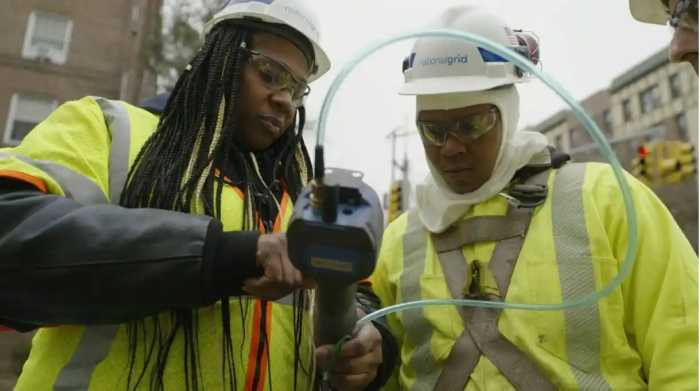
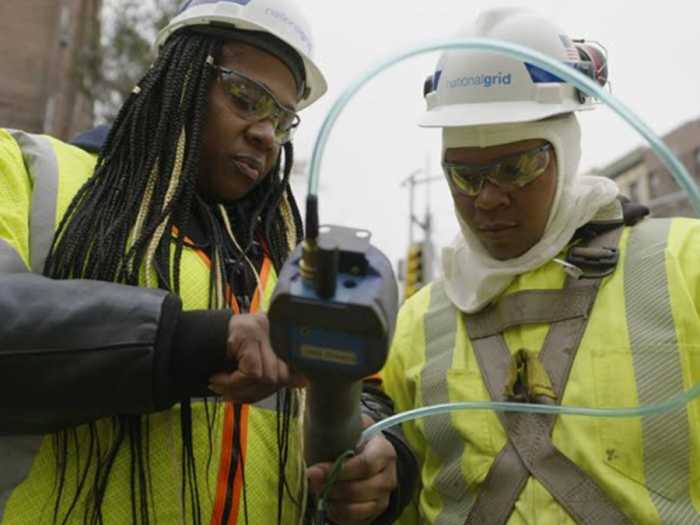
As part of this partnership, National Grid is distributing free natural gas detectors to small residential property owners in its service area at educational events held in partnership with the city’s Department of Buildings. Supplies are limited and go to small property owners on a first-come, first-served basis. At each event, staff demonstrate how the devices work and walk owners through what the law requires.
“Every New Yorker should feel safe at home, and National Grid is proud to partner with the New York City Department of Buildings to help residents prepare for the new natural gas alarm requirement, an important added layer of protection in homes across the five boroughs,” said Phil Sandy, Chief Operating Officer of New York Gas, National Grid. “Natural gas alarms give families an early warning, and we’re glad to work alongside the city to make sure residents and property owners are ready before the January 1, 2027, deadline.”
Local Law 102 applies to residential buildings with gas piping, including:
- Apartment buildings
- One- and two-family homes and other private dwellings
- Hotels, motels, and lodging or rooming houses
- Single room occupancy buildings
Alarms must be placed in each unit near gas appliances. Owners can use hard-wired, plug-in or battery-powered models, as long as the device is listed to UL 1484 or UL 2075, the national safety standards for gas detectors.
Natural gas is critical for heating homes, fueling stoves, and powering appliances across the city. It is safe when properly contained, but poor maintenance, damaged pipes and illegal plumbing alterations can cause leaks that let gas build up indoors. A single spark can then ignite it. Even without a fire, breathing in leaked gas can cause serious health problems, especially for people in high-risk groups.
The city has identified several battery-powered models that meet the law’s requirements: Aware Buildings NG-101; DeNova DD623NCV, DD620NV and ML-310ES; Heiman HM-733NS; Nexelec VIGAS; and Universal Security Instruments USI/NG/10YR. Other compliant models are available, and officials urged buyers to check for the UL listing before purchasing. Battery-powered units can be mounted where detection works best, without needing an outlet or wiring.
National Grid urges customers not to hesitate: if an alarm sounds or if anyone smells gas should get somewhere safe, then call 911 or National Grid’s gas emergency line at 718-643-4050.