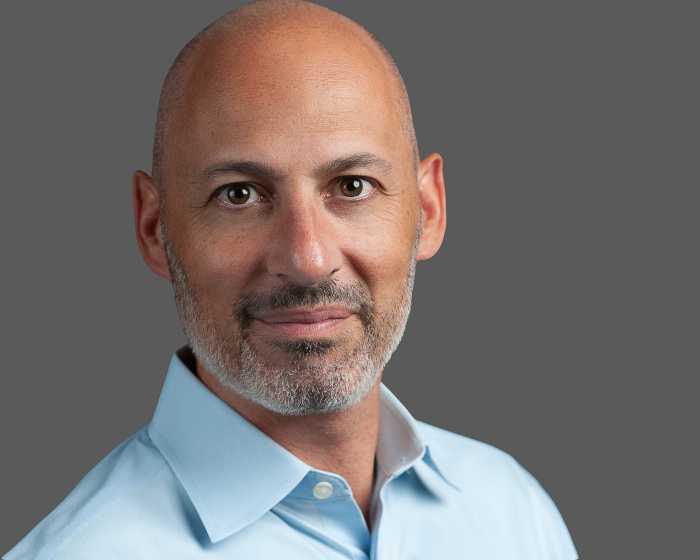
Jeffrey Ginsburg- Volunteers of America GNY

Jeffrey Ginsburg

President and CEO, Volunteers of America-Greater New York

Jeffrey Ginsburg- Volunteers of America GNY

Dr. Jeffrey R. Ginsburg is president and CEO of Volunteers of America–Greater New York, a leading organization addressing the region’s housing crisis. Previously, he served as CEO of East Harlem Tutorial Program and co-founder of East Harlem Scholars Academies. A graduate of Trinity College, Harvard Kennedy School, and Fordham University, Jeff serves on several education and social service boards. His leadership has been recognized with honors, including Crain’s 40 Under 40 and NYU’s McSilver Award.

What’s one piece of advice you’d give to someone starting out in your field?
The best work comes from really listening to the people you’re trying to help. I’ve learned that at East Harlem Tutorial Program and now at VOA-GNY, the solutions that stick are the ones grounded in people’s real experiences. My advice is to listen, stay curious, and be willing to adjust when things don’t go as planned. Changing systems takes patience, persistence, and a lot of humility.

How can policymakers and everyday New Yorkers support your organization?
Policymakers can have the biggest impact by investing in affordable, supportive housing – making sure nonprofits like VOA-GNY have what we need to provide high-quality, dignified care. Everyday New Yorkers can help too: learn about why people experience homelessness, speak up for smart housing policy, volunteer, and support organizations that turn compassion into action. Real change only happens when public will and public policy work together.

What are your organization’s goals for 2026?
In 2026, we will meet the extraordinary needs of our neighbors and communities by rapidly developing more safe, stable, affordable housing in New York City and scaling our innovative solutions to the homelessness and mental health crises. We’ll pair this with the health and wealth-building supports people need to thrive, while continuing to strengthen partnerships, invest in our staff, and improve outcomes for those we serve.

Eric Goldstein- UJA Federation

Eric Goldstein

CEO, UJA-Federation of New York

Eric Goldstein- UJA Federation

Eric was appointed UJA-Federation’s CEO in 2014. Before joining UJA, Eric was a leading partner at Paul, Weiss, Rifkind, Wharton & Garrison LLP.

What’s one piece of advice you’d give to someone starting out in your field?
UJA has long been committed to nurturing the next generation of Jewish communal leaders. Over my nearly 12 years as CEO, I’ve advised countless young professionals that the only constant in this work is change. From navigating a global pandemic to responding to crises in Israel and rising antisemitism, the world shifts quickly — and success in this field requires perseverance and a deep sense of purpose in the mission.

How can policymakers and everyday New Yorkers support your organization?
UJA works across every level of government to ensure that our city remains a place where our Jewish community, and all communities, feel safe and respected. We ask policymakers to govern with humility, inclusivity, and a deep respect for the diversity of views and experiences that define our city. This includes helping ensure that Jewish life and the freedom to support Israel are protected, antisemitism is denounced in all circumstances and Jewish life thrives.

What are your organization’s goals for 2026?
UJA is focused on strengthening and sustaining the vibrant Jewish community in New York— work that inherently also includes combating antisemitism and ensuring community security. In a time of significant funding cuts to the social safety net, we’re also expanding support for vulnerable New Yorkers. And in Israel, UJA remains at the philanthropic forefront, helping Israelis heal through mental health and rehabilitation services while rebuilding and restoring devastated communities in southern and northern Israel.

Leslie Gordon- Food Bank for NYC

Leslie Gordon

President and CEO, Food Bank For NYC

Leslie Gordon- Food Bank for NYC

Leslie Gordon, president and CEO of Food Bank For New York City assumed the role in 2020, with a focus on addressing food insecurity in NYC. Under her leadership, Food Bank’s annual food distribution increased from 70 million pounds to 150 million pounds. Thanks to Leslie’s unwavering commitment to protecting the dignity of all New Yorkers, countless families have been able to put food on their tables and feed their families. 

What’s one piece of advice you’d give to someone starting out in your field?
Walk in your client’s shoes. Serving a community means hearing them. Be where the people are. Attend food distributions and community events. Get a sense of their needs, their feelings, and let that be a driving force in what you do.

How can policymakers and everyday New Yorkers support your organization?
Right now, food insecurity and cost of living remain high, the shutdown impacts are still being felt, changes to SNAP and Medicaid are coming, and what we need most is support. Everybody can answer our call to action to Donate, Volunteer and Advocate. For policymakers: we need funding and resources to keep doing what we do best, which is getting food into communities, to the people most in need, through our network of community-based providers.  

What are your organization’s goals for 2026?
We will continue our work to break cycles of poverty and food insecurity. Our whole-person approach remains at the center of this effort, combining financial empowerment, nutrition education, and, of course, access to nourishing food. We are also focused on expanding food access and advancing equity across the city.

Sharon Greenberger- YMCA

Sharon Greenberger

President and CEO, YMCA of Greater New York

Sharon Greenberger- YMCA

Greenberger is the president and CEO of the YMCA of Greater New York, New York City’s leading nonprofit advancing health and well-being for all. The Y serves a diverse population of more than 400,000 New Yorkers through programs and services at 24 branches citywide that empower youth, improve health, and strengthen community. Under her leadership, the Y has focused on reimagining programs and services to meet communities’ most pressing and ever-changing needs.

What’s one piece of advice you’d give to someone starting out in your field?
Effective leaders need to be great storytellers. Develop compelling narratives around what you do, why it matters, and what inspires you. And along the way, try your best to understand your personal impact and make that part of your story.

How can policymakers and everyday New Yorkers support your organization?
There are countless ways to become involved in the Y as a member, volunteer, and champion. We need community and purpose, and the Y provides New Yorkers with a sense of belonging and achievement. We can help you meet a health goal, help your child learn to swim, and ensure your teen is prepared for college and careers. We’d love all New Yorkers to take advantage and support our wide array of programs and services.

What are your organization’s goals for 2026?
As we prepare for our 175th anniversary in 2027, we’ve launched a campaign to increase access to our impactful programs and help fund new facilities. And as we always do, we will work to understand our communities’ changing needs so that we can address our most pressing challenges, from food insecurity to health and well-being, and from strengthening civic engagement to expanding access to aquatics programs.

Christina Hanson- Part of the Solution

Christina Hanson

Executive Director, Part of the Solution

Christina Hanson- Part of the Solution

Christina Hanson joined Part of the Solution (POTS) in 2012 and became its executive director in 2019. Before she joined POTS, Christina joined the Peace Corps and began to volunteer in the fields of health and education in Senegal. Upon her return, she joined Fairmount Ventures, where she helped small nonprofit organizations deliver on their missions. As a part of POTS’ leadership, she is committed to promoting inclusivity and diversity.

What’s one piece of advice you’d give to someone starting out in your field?
Be curious, be willing to try and take on new and different projects even if sometimes they are outside your standard job. Understand how your work moves the mission forward and apply that all the time.

How can policymakers and everyday New Yorkers support your organization?
Policymakers can support policies that help people who are struggling in our community and that support the humanity of our neighbors. New Yorkers can learn about programs that help people facing food insecurity and poverty. They can support those programs through advocacy, financial support and volunteerism.

What are your organization’s goals for 2026?
We will move clients to financial stability and self-sufficiency through providing a comprehensive suite of services. By scaling up our stability index model, we will break the cycle of poverty for more families and individuals in New York City.

Cal Hedigan- Community Access

Cal Hedigan

CEO, Community Access

Cal Hedigan- Community Access

Cal Hedigan is CEO of Community Access, a leading NYC nonprofit expanding opportunities for people living with mental health concerns through housing and healing-focused services. Under her leadership, the organization is developing 2,200 units of supportive and affordable housing for over 6,000 people in integrated settings. Community Access is committed to increasing access to rights-based mental health supports across the public mental health system. Cal joined Community Access in 1999 and became CEO in 2019.

What’s one piece of advice you’d give to someone starting out in your field?
Take the time to learn how systems actually work – and don’t be afraid to question why they work that way. Real progress in mental health means changing more than policies; it means changing mindsets. Stay close to the people who remind you why this matters and keep working steadily to change the conditions that make the work necessary.

How can policymakers and everyday New Yorkers support your organization?
Policymakers can support our organization by accelerating supportive housing development for people living with mental health concerns and advancing models that deepen community integration. Operational funding that supports equitable wages and annual inflation-aligned increases is essential to ensure that staff are fairly compensated and can build trusting, enduring relationships with the people we serve. New Yorkers can support our work by bringing an open mind and open heart to issues surrounding mental health and homelessness.

What are your organization’s goals for 2026?
Community Access will continue to develop affordable and supportive housing with a robust pipeline. Two Bronx projects are in construction in 2026 – providing quality housing to over 500 households. We will also work towards a construction closing on a project in the East Village and pursue other opportunities to reach our housing development goal. We will expand access to rights-based community services by opening an innovative residential crisis support program on the Lower East Side.

Michelle Jackson- Human Services Council

Michelle Jackson

Executive Director, Human Services Council of New York

Michelle Jackson- Human Services Council

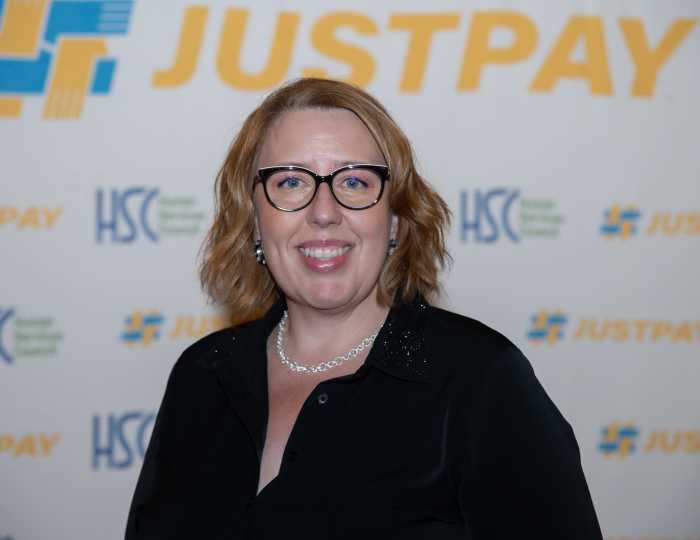
Michelle was appointed executive director in 2020 and leads the #JustPay Campaign, which seeks equitable pay for human services workers, resulting in nearly $3 billion in funding to increase human services wages to date. Michelle serves on the Advisory Board of the Mayor’s Office of Nonprofit Services and was formerly on the Mayor and Comptroller’s Joint Taskforce to Get Nonprofits Paid on Time, which helped clear a backlog of $4.2 billion in unregistered contracts.

What’s one piece of advice you’d give to someone starting out in your field?
Movement building. To advocate for human services workers and the communities they serve, it’s critical that we movement build across subsectors within human services. I am proud to say that, in our #JustPay campaign, our collective political power comes from the statewide support of human services workers and organizations. With #JustPay, we work with partners across the state, from Syracuse to New York City, to end government-sanctioned poverty wages for human services workers.

How can policymakers and everyday New Yorkers support your organization?
Policymakers can support HSC and the human services sector by ending government-sanctioned poverty wages for human services workers through automatic cost-of-living adjustments and equitable salaries on contracts with nonprofits. Human services workers deserve good-paying jobs that allow them to maximize their human potential while serving New Yorkers from all walks of life. Everyday New Yorkers can support human services workers by calling on our elected officials to support #JustPay!

What are your organization’s goals for 2026?
We are asking Gov. Hochul to provide a 2.7% targeted inflationary increase to bolster rates and contracts for human services workers, include human services programs that have been left out of typical budget increases, and establish a commission to examine the crucial role of nonprofit human services workers for NY’s economy and community health. In NYC, we are introducing wage equity legislation that would align compensation for nonprofit job titles with city government job titles.

Leah C. Johnson- Lincoln Center

Leah C. Johnson

Executive Vice President, Chief Communications, Marketing and Advocacy Officer, Lincoln Center for the Performing Arts

Leah C. Johnson- Lincoln Center

Johnson is executive vice president, chief communications, marketing and advocacy officer for Lincoln Center for the Performing Arts. Since 2019, she has helped reach new audiences and led the institution’s ongoing transformation into a place where all New Yorkers can feel welcome, including by implementing a Choose-What-You-Pay ticketing model. Leah holds a B.A. in psychology from Harvard College. A Brooklyn native, she resides in East Harlem with her husband and daughter.

What’s one piece of advice you’d give to someone starting out in your field?
Start by deeply understanding the community you’re serving and let that understanding guide every decision. The most effective initiatives are rooted in listening and responsiveness. As communities evolve, so must institutions.  It’s important to stay nimble and adapt to community needs to ensure our work remains meaningful and reflective of the audiences we serve. 

How can policymakers and everyday New Yorkers support your organization?
Ensuring an institution serves its community takes partnership. Policymakers can prioritize arts funding and investing in public spaces that foster connection, while New Yorkers can show up, attend a performance, join the community planning process for our West Initiative, or bring a friend who’s never been to Lincoln Center. Every ticket reserved, every voice shared in our community helps sustain a Lincoln Center that reflects the vibrancy of our city and artists. 

What are your organization’s goals for 2026?
2026 will be a year of transformation and connection at Lincoln Center. We’re breaking ground on our Amsterdam Avenue project, opening the West side of our campus to increase welcome for our neighbors and create new, world-class public spaces for performances and community joy. We’ll continue offering our Choose-What-You-Pay model and building programs that invite audiences – both new and returning – to see themselves reflected on our stages.

Nicolas Manassi

Roderick Jones

President, Goddard Riverside

Nicolas Manassi

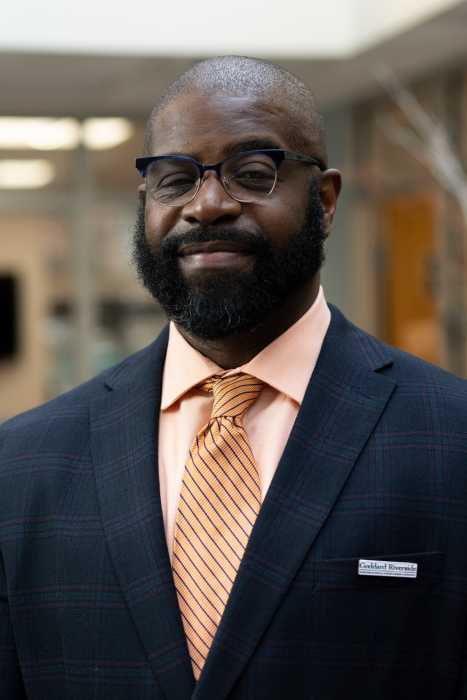
Roderick L. Jones, Ed.D., has led Goddard Riverside since February 2017. Previously, he served as president and CEO of St. Louis’s Grace Hill Settlement House. Jones grew up in public housing in Brooklyn and returned to NYC to ensure New Yorkers had opportunities to lift themselves from poverty. He serves on the board of PFLAG and has previously been a board member at Homeless Services United, United Neighborhood Houses and the International Federation of Settlements.

What’s one piece of advice you’d give to someone starting out in your field?
It’s key to remember that people are the most important thing in our business. All things having to do with people come down to relationships. Managing and advancing relationships at all levels is critical. I’ve come to value relationships at every level so much more over the years.

How can policymakers and everyday New Yorkers support your organization?
We’d like to work in partnership to create policies and innovations that change the odds for people. Help us identify problems and develop new solutions together. We’d love to be part of the policymaking process. We welcome all New Yorkers to learn more about our work and get involved in the community, whether with us or another organization in your neighborhood.

What are your organization’s goals for 2026?
My biggest goal is to make Goddard Riverside an employer of choice. We are focused on taking care of the people who take care of the people we serve.

Jennifer Jones Austin- FPWA

Jennifer Jones Austin

CEO, FPWA

Jennifer Jones Austin- FPWA

As CEO of FPWA, an anti-poverty, policy and advocacy organization with 170 member agencies and faith partners, Jennifer Jones Austin has led and secured monumental changes in social policy and law to strengthen and empower the disenfranchised and marginalized, and to help ensure providers have the resources and supports needed to care for individuals and families receiving services. Jennifer has led and served on several city and state commissions, and is the co-chair of the National True Cost of Living Coalition, advancing the nation’s first-ever true cost of economic security measure.

What’s one piece of advice you’d give to someone starting out in your field?
Spend some time working in government, so you can develop a first-hand appreciation of why government does what it does – how and why social, economic and fiscal policy decisions are made. 

How can policymakers and everyday New Yorkers support your organization?
Policymakers can support FPWA by centering on what it truly costs for New Yorkers to live with economic security, not just above poverty levels. Utilizing the City’s, now charter-mandated, true cost of living measure to shape and inform policies is critical to ensuring all New Yorkers live with dignity, agency and freedom.

What are your organization’s goals for 2026?
In 2026, FPWA will remain focused on our north star of advancing economic security for all, and more specifically, ensuring the adoption and utilization of the first ever True Cost of Economic Security measure here in New York City, New York State and the nation.