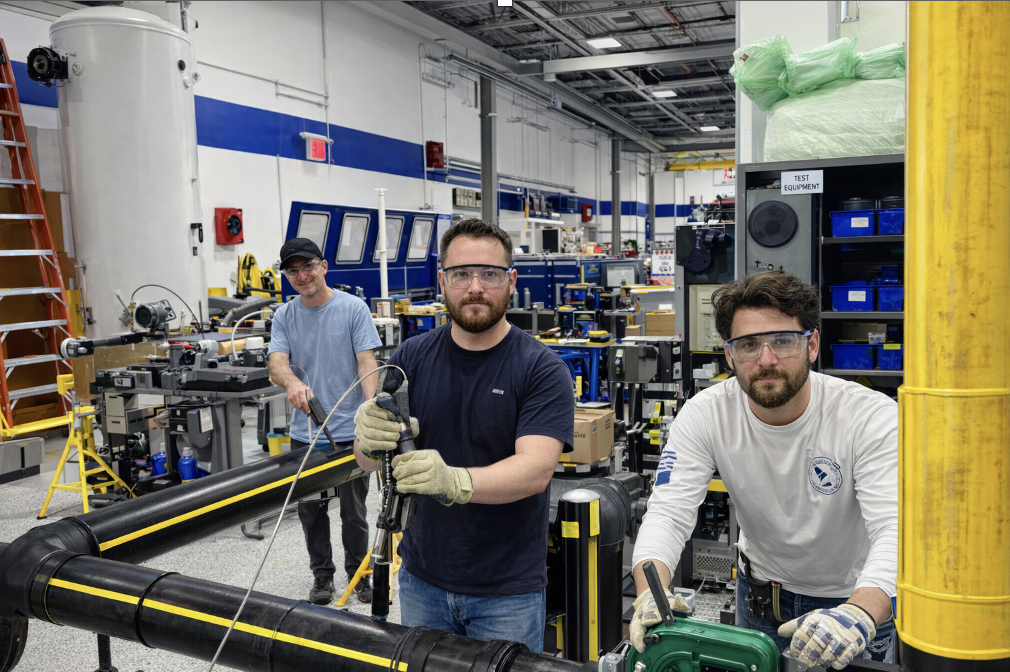
Millions of New Yorkers depend on National Grid’s Materials Testing Lab in Melville, Long Island. Without it, showers would be cold—and so would the food.
That’s because National Grid’s gas network is a critical piece of infrastructure. What many New Yorkers don’t know is that there’s a team working to prevent problems before they begin, ensuring the safety, reliability, and efficiency of the network.
Testing to prevent and diagnose
Before any pipe or component reaches the field, engineers test it to spot defects, performance limits, or early signs of wear—long before they can pose a risk.
When something goes wrong, the lab digs into it. Teams analyze failures to understand what caused them and whether the issue is isolated or could show up elsewhere. From there, they take action—removing weak materials, tightening quality controls, or working with manufacturers to make products perform better.
The result is smarter decisions, stronger infrastructure, and safer operations.
Keeping the gas flowing for customers
By catching issues early, the lab helps prevent outages and repairs, keeping service stable and affordable—and helping customers avoid disruptions and added costs.
It’s all about turning data into action. The lab’s work shapes what materials get approved, how they’re purchased, and how they’re used in the field. Every test and every analysis helps make the gas network more reliable, reduces risks, and keeps it running better over time.
In a complex, high-stakes environment, prevention is essential.
That’s why the National Grid Materials Testing Lab takes a proactive approach—keeping unsafe materials out of the system and removing equipment that could pose a risk, making the network stronger overall.
Because safety isn’t just an outcome. It’s something National Grid builds into the system every single day.