
Gov. Kathy Hochul’s State of the State speech continued to lay out her ambitious vision for New York’s technology future — from artificial intelligence (AI) and semiconductor manufacturing to quantum research and advanced computing.
But perhaps the most important takeaway was something more fundamental: this innovation runs on electricity, and America has under-invested in energy and transmission for nearly three decades. To power our ambitions of today and tomorrow, Hochul is proposing a nuclear build-out larger than any taken in a generation.
Winning the global tech race requires the U.S. to unleash a full-scale innovation strategy that ensures American leadership not just in AI, but in energy — because energy is the foundation for every economic and security desire we have. Jobs, reindustrialization, competitiveness, and innovation all depend on abundant, reliable power.
Electricity demand is rising rapidly, and shortfalls are becoming an immediate economic and national security risk. In the global tech race, power isn’t just a strategic advantage, it’s the very driver of success. Countries and states that generate abundant energy, connect it to the grid, and deliver it efficiently and affordably will attract the industries that drive economic growth, military capability, and technological leadership.
Global competitors understand this clearly.
China has invested heavily in power generation and ultra-high-voltage transmission while scaling nuclear, coal, and renewables at a pace unmatched in the West. Beijing treats power infrastructure as a critical strategic asset for industrial dominance and technological leadership.
Most voters agree that if China pulls ahead of the U.S. in AI and advanced computing, it could enable espionage and cyberattacks that threaten American national security and economic growth. Democratic values of a free and open internet would be replaced with censorship and control. This should serve as a wakeup call: the race for leadership will be won by the nations that build the infrastructure that makes innovation possible.
That maxim also applies domestically.
Companies deciding where to locate data centers, manufacturing facilities, and next-generation infrastructure prioritize energy availability, reliability, and cost. States expanding generation and transmission will win these projects. States that overregulate and under-build will lose them, along with the jobs, tax base, talent, and investment that follow.
Hochul is right to pursue building out the Empire State’s nuclear capacity, but existing policies and lawmaker priorities risk undermining her ambitions. In fact, the state also leads the nation in the number of bills introduced to regulate emerging technologies, including AI.
If lawmakers remain hostile to both innovation and the necessary infrastructure to power the future, New York — and potentially the U.S. — will be left out of the equation, and China will lock in a decades-long technology advantage.
Gov. Hochul’s ambitions are welcome, but infrastructure readiness will determine whether those ambitions translate into economic growth. To maximize billions in public and private investment, elected leaders in all 50 states must prioritize policies that make it faster and easier to build power plants and transmission lines — not harder.
New York has every advantage — a world-leading innovation ecosystem, deep capital markets, abundant resources, and top-tier technical and academic talent. But those advantages are meaningless without the infrastructure to support them.
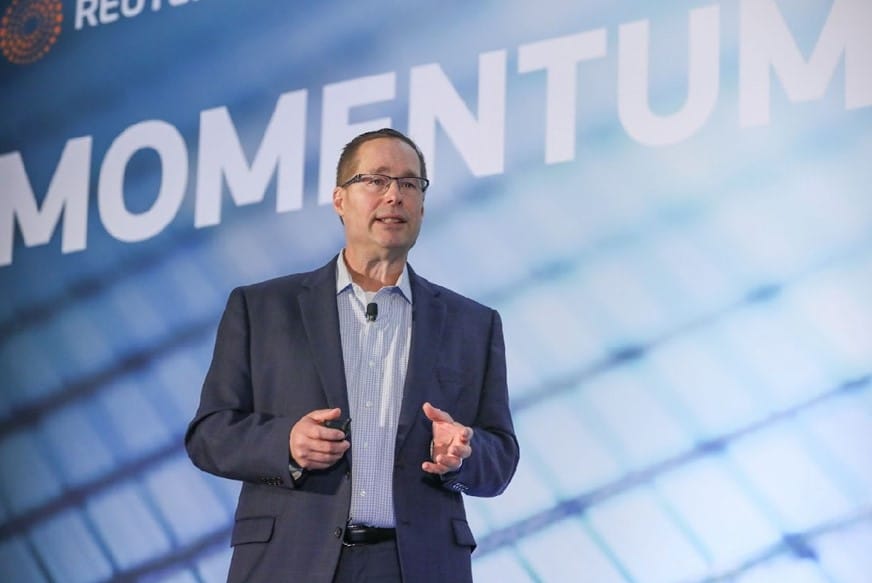
Doug Kelly is CEO of the American Edge Project, an advocacy group focused on protecting and promoting American leadership in innovation.